The North Face Tee Shrinkage: Check Weight & Care
| Published | |
|---|---|
| Revised | |
| Editors | Maya Chen Editor-in-Chief |
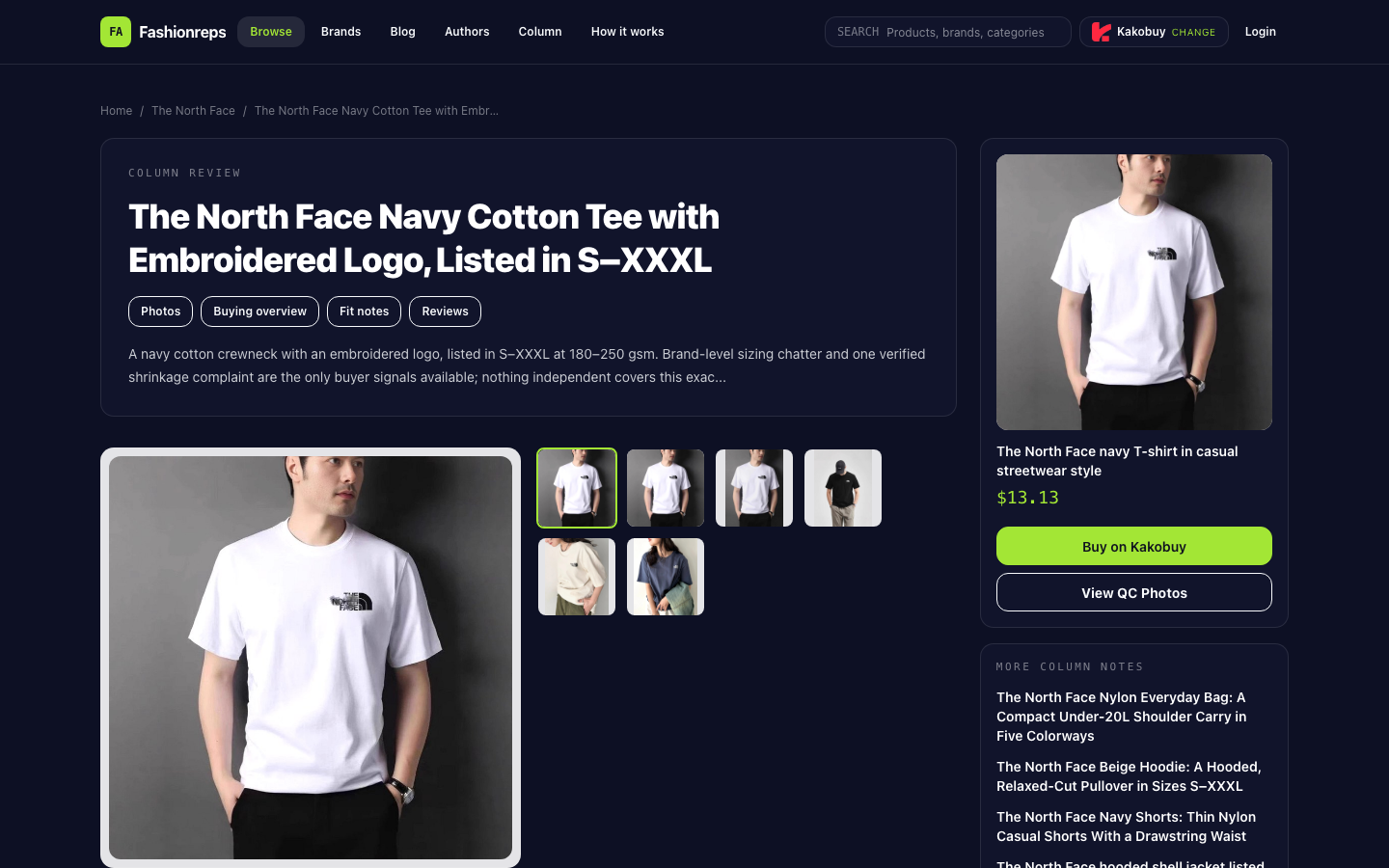
What we can confirm about this navy short-sleeve tee at the moment is: the page lists it as 100% cotton, 180–250gsm, crew neck, straight-fit short sleeve, sizes S–XXXL, and it features an embroidered logo. What really determines whether it's worth ordering isn't these catalog specs themselves, but two questions that haven't been independently answered for this specific st
Editor score 4.2 / 5

What we can confirm about this navy short-sleeve tee at the moment is: the page lists it as 100% cotton, 180–250gsm, crew neck, straight-fit short sleeve, sizes S–XXXL, and it features an embroidered logo. What really determines whether it's worth ordering isn't these catalog specs themselves, but two questions that haven't been independently answered for this specific style: how much it will shrink after washing, and whether the size you plan to buy matches the actual flat measurements.
First, assess what the current evidence supports
The page information supports that this garment is a basic cotton tee in the medium weight range, described as straight fit, in navy. The page also notes that colorfastness is listed in the product information, but that doesn't mean there are post-wash tests from buyers of this style, nor can it be used to infer long-term durability.
Regarding sizing, existing discussions typically consider The North Face apparel to run true to size. However, this feedback is brand-level sizing experience, not measured data for this specific navy tee, so it can only serve as a preliminary reference.
For shrinkage, the page includes a verified review of a brand garment mentioning thin fabric, loose threads, and noticeable shrinkage even with low-temperature damp drying. This signal is worth noting, but it doesn't prove that this specific navy style will shrink to the same degree.
Fabric weight only helps set expectations
180–250gsm is a range, not a single weight. The lower and upper ends of the range can feel noticeably different: lower weights are typically lighter and thinner, higher weights more substantial. But from the range alone, you can't tell where the actual shipped item falls, nor can you predict size changes after washing.
So before ordering, don't just ask "is it around 200gsm?" Also ask the seller to confirm:
- The specific weight of the actual batch or acceptable tolerance.
- Whether the fabric is pre-shrunk.
- The care label's temperature, drying, and line-dry restrictions.
- Whether the collar, hem, and cuffs are constructed in a way prone to losing shape.
If the seller can only repeat catalog specs but can't provide care labels or flat measurements, the shrinkage risk remains unquantifiable.
Check flat measurements in order before buying
First, take a tee that fits you well as a reference. Measure length, chest width, shoulder width, and sleeve length, and record how you measured—for example, chest width measured flat under the armpits, length from shoulder point to hem.
Second, ask the seller for the actual size chart for this item and confirm whether the measurements are garment flat measurements or body measurements. The two cannot be used interchangeably.
Third, focus on chest width and length. If shrinkage is your main concern, length usually needs more allowance than chest width, because a shorter garment after washing directly changes the wearing proportion. If the page only gives a size range S–XXXL without specific centimeter measurements, don't order based solely on your usual letter size.
Fourth, ask about measurement tolerance. The page mentions a measurement tolerance of 1 unit, but doesn't provide complete actual measurements for each size. Confirm the tolerance unit with the seller, and whether it applies equally to length, chest width, and sleeve length.
Care evidence needs separate verification
Currently, the available information doesn't include a complete care label for this specific item, nor independent post-wash comparison photos for this style. So you can't treat brand-level shrinkage complaints as a definite result for this style, nor promise that a certain washing method will prevent shrinkage.
A safer approach is to ask the seller for a photo of the care label and confirm the following:
- Whether cold water wash is recommended.
- Whether tumble drying is explicitly prohibited.
- Whether washing inside out or low spin is required.
- Whether there is any pre-shrink, shrinkage rate, or post-wash measurement information.
If you do buy it, for the first wash, prioritize cold water, gentle cycle, and natural flat or line drying, avoiding the dryer as a default. This is a conservative way to reduce the risk of deformation common in cotton garments, not a guarantee that shrinkage will be eliminated for this style.
Also note the lack of workmanship evidence
The buyer signals on the page also mention thinness, loose threads, and variations in embroidery detail, but this information isn't from uniform testing of the same batch. Other consumers who bought brand apparel directly felt the embroidery wasn't refined enough, which only shows potential visual differences between individual pieces, not a substitute for quality inspection photos of the current item.
If you care about embroidery edges, stitching, or fabric thickness, ask the seller for close-up photos of the current batch before buying. Once you receive the item, also distinguish warehouse QC photos from catalog images; the catalog shows the style, not the actual workmanship of the shipped piece.
Final purchase decision
You may consider buying if: you accept catalog specs rather than independent testing as the main basis, the seller can provide flat measurements and care labels for this style, and you are willing to avoid high-temperature drying. The navy color, straight fit crew neck, and S–XXXL range suit buyers looking for a basic cotton tee without strong fit requirements.
You should get more evidence before deciding if: you need precise length, or you are between two sizes; in that case, at least get chest width, length, shoulder width, and sleeve length data, then compare with your existing clothes.
You should hold off ordering if: the seller can't provide a specific size chart and care information, and you can't accept noticeable shrinkage; or if you consider fabric thickness, embroidery refinement, and durability as core purchase criteria, but currently there are only catalog specs and brand-level feedback without independent testing for this style.
Overall, this tee is not a low-risk choice that is "confirmed not to shrink." A more accurate conclusion: the basic specs are clear, brand-level sizing feedback is relatively normal, but this style lacks independent post-wash measurements and actual workmanship evidence. Checking flat measurements and care labels before ordering is more important than simply buying your usual size.