How to QC a Stone Island Fall/Winter Jacket
| Published | |
|---|---|
| Revised | |
| Editors | Maya Chen Editor-in-Chief |
What This Stone Island Fall/Winter Jacket QC Guide Solves If you're looking at a gray Stone Island-style fall/winter jacket, what you really need to confirm isn't whether the product name sounds reliable, but whether the QC photos support continuing with the purchase, requesting more photos, or stopping the order. This guide focuses on one specific item: the page shows a gray padded jacket, available in sizes M to XXL, with shoulder width, chest,
Editor score 4.2 / 5
What This Stone Island Fall/Winter Jacket QC Guide Solves
If you're looking at a gray Stone Island-style fall/winter jacket, what you really need to confirm isn't whether the product name sounds reliable, but whether the QC photos support continuing with the purchase, requesting more photos, or stopping the order. This guide focuses on one specific item: the page shows a gray padded jacket, available in sizes M to XXL, with shoulder width, chest, and sleeve length measurements provided.
This article only discusses what can be observed in the photos and the editorial judgments based on that evidence. QC photos cannot prove authenticity, warmth, or long-term durability, nor can they replace checking the return/exchange policies of the destination country. 🧥

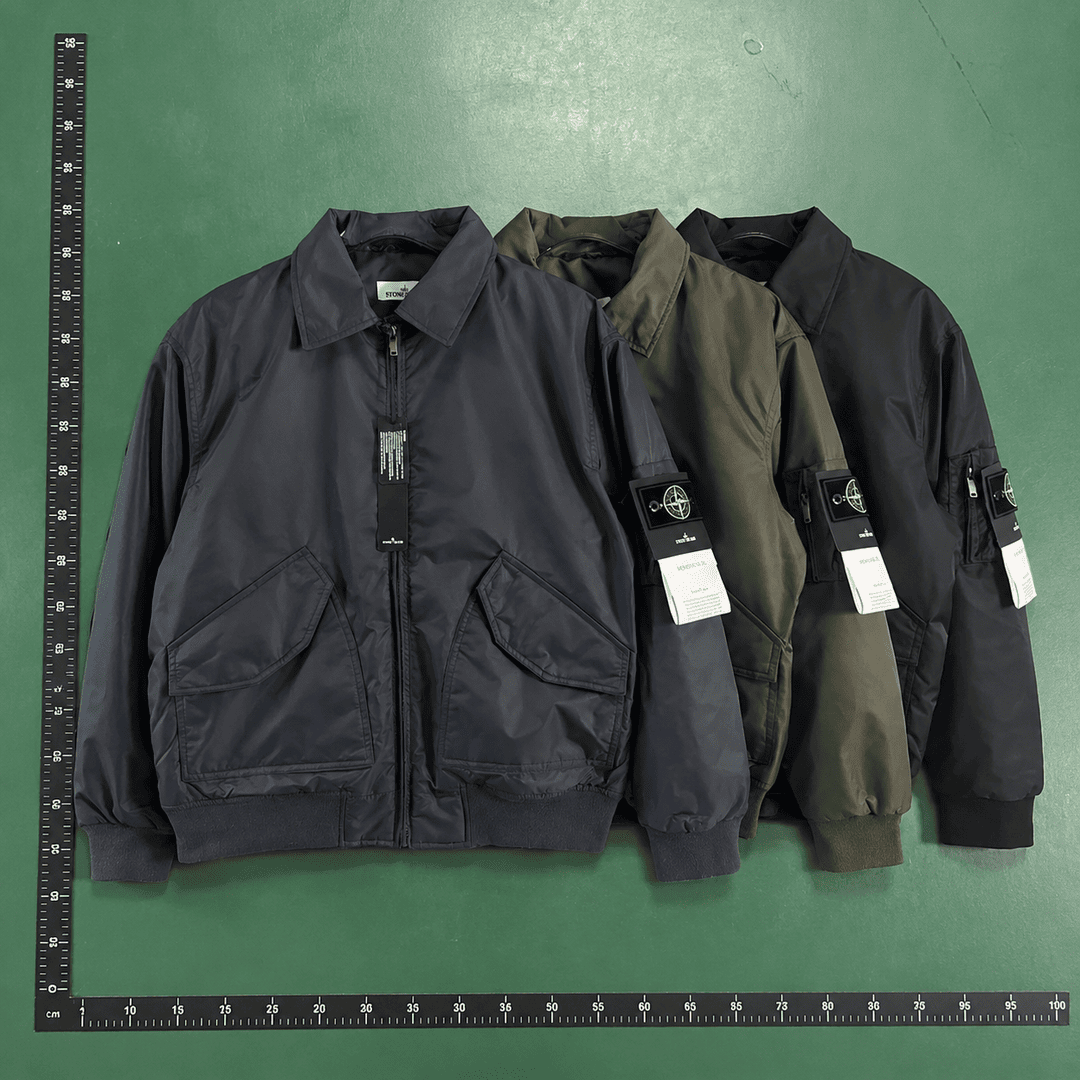
Figure 1: QC photos accessed via "View QC Photos" on the product page, used to check the appearance, size markings, and visible workmanship of this gray jacket. The images serve only as pre-purchase evidence and do not represent actual feel, authenticity, or quality assurance.
Enter the Product Page and Open View QC Photos
First go to the product page, confirm that the product name, color, and size range match your current selection, then click "View QC Photos" on the page. Do not infer the actual condition of this jacket from images on the homepage, brand page, category page, or other products.
This product page provides options in gray, black, and green, and sizes M, L, XL, XXL. The QC photos used in this article correspond to the gray jacket page; do not mix in images of other colors or products.
Once in the gallery, it's recommended to view in this order:
- First look at the entire jacket to confirm the color, silhouette, and panels match the product page.
- Then examine front, back, side, and close-up shots, looking for abnormalities in the zipper, pockets, cuffs, and hem.
- Finally, review the neck label, size tag, sleeve logo, and packaging condition; if there are no clear photos, record them as unverified.
If the gallery doesn't provide enough angles, do not use the main product image to fill in the evidence. 📷
How to Check Zipper, Hardware, and Pocket Structure from Photos
The zipper should be checked on three levels. First, whether the zipper track is continuous, with no obvious misalignment, missing teeth, or partial opening. Second, whether the connection between the puller and zipper tape shows signs of loosening. Third, whether the zipper installation stitching stays roughly straight along the panel edge.
These are visible checkpoints in the photos, not proof that the zipper has been tested. If the QC photos only show a static front view, you cannot judge the smoothness, jamming, or load-bearing capacity of the zipper.
Pockets need to be checked for symmetry, obvious wrinkling at the opening, and whether the flap or zipper matches the product structure description. If photo angles obscure the pocket opening, inner pockets, or hardware, mark them as insufficient evidence rather than assuming the structure is fine.
| Check Point | What Can Be Confirmed in Photos | What Cannot Be Directly Inferred |
|---|---|---|
| Main zipper | Track continuity, puller appearance, obvious misalignment of installation | Smoothness, durability, damage after repeated use |
| Pockets | Opening position, left-right relationship, visible stitching and hardware | Internal capacity, load-bearing, completeness of hidden structure |
| Sleeve logo | Whether the logo is visible, clarity of position | Authenticity, material, attachment strength |
| Collar and placket | Outer contour, seam edges, and overlapping relationships | Wearing comfort, warmth, long-term deformation |
Check for Visible Abnormalities in Cuffs, Hem, and Seams
Cuffs and hem are key areas for judging appearance consistency. Look for obvious looseness, localized distortion, fraying, broken threads, or differences in left-right length in the ribbing or closures. Slight shadows in photos should not be immediately judged as stains or damage; only record as a concern if the same abnormality is visible from different angles.
For seams, observe whether there are obvious skipped stitches, loose threads, puckering, or misalignment of fabric layers. The focus is not on finding "absolutely flawless" images, but on distinguishing normal visual errors from issues that may affect use: a few uncut threads need to be evaluated based on location, while continuous open seams near the zipper, cuffs, or stress points are more worth confirming with additional photos.
For a padded jacket, also observe whether the filling layer shows obvious empty spots or abnormal clumping in certain areas. However, static QC photos cannot prove fill distribution or actual warmth; do not turn appearance judgments into wear test conclusions. ❄️
How to Re-check Color, Size, and Fit Information on the Product Page
Color judgment must be based on the correspondence between the product page and QC photos. The page shows this model in gray, black, and green; do not misjudge gray as another color just because the photo lighting is cool or warm. Compare with the product page color swatch under similar lighting and note whether the "color shown in photos" matches the "selected color on the page."
Size cannot be judged only by letters like M, L, XL, or XXL. The page provides approximate shoulder widths of 54 to 59 cm, chest circumferences of 126 to 136 cm, and sleeve lengths of 63 to 67.5 cm. Since these measurements are from the product page, you should measure one of your own jackets flat and compare with the corresponding size before purchasing.
This set of measurements seems to fall into a looser jacket range, but this is an editorial fit judgment based on page numbers, not a wear test. Different measuring methods may cause errors, especially when the start and end points for shoulder, chest, and sleeve measurements vary. 📏
How to Record Visible Facts, Concerns, and Editorial Judgments
It's recommended to record in three layers to avoid writing speculation as fact:
- Visible facts: colors, partial structures, stitching, labels, or surface abnormalities that can actually be seen in photos.
- Unverified items: content that is blurry, obstructed, or requires hands-on operation to judge.
- Editorial judgments: recommendations on continuing purchase, requesting more photos, or stopping based on visible facts.
For example, if photos clearly show no obvious broken threads at the cuff edge, record as "current photos show no obvious broken threads," not "cuff quality is reliable." If the zipper is obscured by a panel or packaging, record as "zipper condition cannot be fully verified," not "the zipper is fine."
For this item, the public product page clearly provides a size chart, but there is no independent buyer evidence covering this specific product listing. Therefore, judgments about seam strength, fill warmth, logo attachment, and long-term durability should be kept as unverified items. 📝
How to Request Additional Photos or Stop When QC Images Are Insufficient
If the existing photos cannot support a decision, you can make targeted requests to the seller or shopping agent instead of just saying "please take clearer photos." It's recommended to specify the exact locations:
- Close-up of the main zipper fully closed and fully open.
- Continuous detail shots of the left and right cuffs, hem, and main seams.
- Front close-up of the neck label, size tag, and sleeve logo.
- Overall shot of the gray panels in natural light to compare with the product page color selection.
- Multi-angle photos of any suspected loose threads, stains, wrinkles, or uneven filling areas.
If additional photos still miss key risks, pause the purchase. Especially if you care about sleeve length, fit precision, or logo details, do not continue the order based on just one full shot. Requesting more photos also does not guarantee the seller will provide genuine, complete, or unselective evidence, so re-verify after receiving the images.
Final Step: Use the Verification Checklist to Decide Whether to Continue
Before ordering, make a final judgment using this checklist:
- The product page and QC photos correspond to the same gray jacket.
- No obvious conflict between the selected color and the visible color in the photos.
- Sufficiently clear photos of the zipper, pockets, cuffs, hem, and main seams.
- No obvious broken threads, open seams, severe misalignment, or damage at stress points.
- Measurements of shoulder, chest, and sleeve length have been compared with your own jacket.
- Reasonable uncertainty remains about authenticity, warmth, fabric feel, and long-term durability.
- You have confirmed the agent's after-sales window, photo request policy, return/exchange terms, and possible costs.
If key areas are clear, size matches, and you accept the risks of no independent buyer verification, you can continue to check the product price, service fee, and international shipping on the agent's page. If there are unresolvable concerns about color, sleeve length, or stress areas, prioritize requesting more photos; if the additional photos still do not support a decision, stopping the purchase is safer. ✅
In the end, what you save is not a fixed amount, but avoiding return/exchange and re-shipping costs caused by size mismatch, color discrepancy, or visible flaws. Continuing to purchase suits buyers who can measure themselves, accept limited photo evidence, and are willing to bear after-sales uncertainty. This QC approach is not recommended for those who need authenticity guarantees, must confirm actual warmth, or cannot afford cross-border return costs.